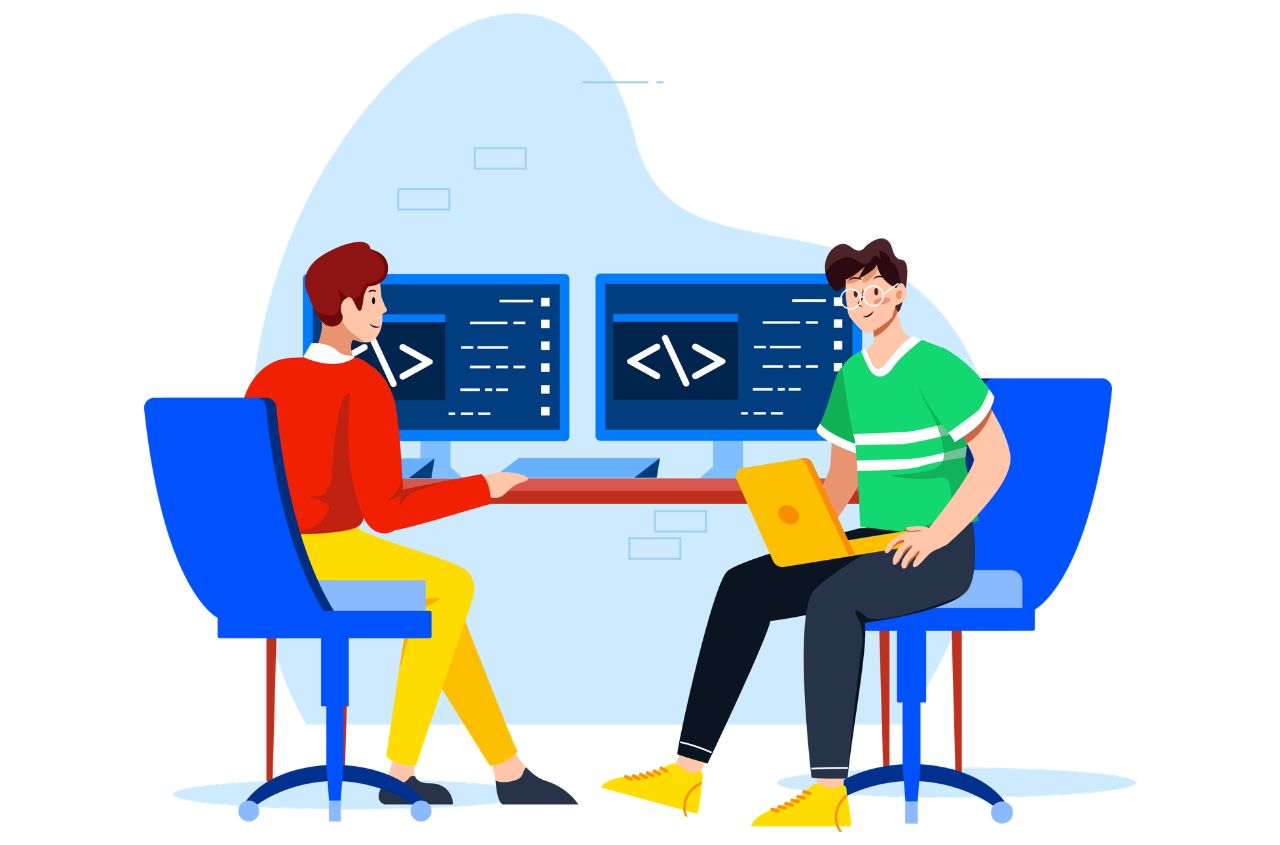


Last Tuesday, I watched a senior engineer ship a full authentication microservice. OAuth flows, token rotation, rate limiting. Done in forty-five minutes. She typed maybe eleven lines of code herself. The rest happened through conversation.
That's vibe coding in mid-2026. Not a gimmick. For many teams, it’s simply how software gets built now.
From Autocomplete to Collaborator
When Andrej Karpathy first used the term “vibe coding” in early 2025, the idea sounded almost too neat: describe what you want in plain language, and AI writes the code. You stay in flow, guide the direction, adjust as needed.
Plenty of engineers were skeptical. It felt fine for quick prototypes, maybe risky for anything that touched production.
That hesitation didn’t last long.
Today, vibe coding shows up in real workflows across companies like Stripe and Shopify, along with countless smaller teams. The loop between idea and implementation has tightened to the point where the old write-compile-debug cycle feels like commuting to an office to send an email.
The Tools Running the Show
The AI coding market has exploded, and a few players have taken the lead.
Cursor has been hard to ignore. After crossing $500M ARR in late 2025 (a milestone that took Slack four years and Cursor roughly two) it hasn't slowed down. Its agent mode lets developers kick off multi-file refactors and feature builds that AI executes autonomously across an entire codebase.
GitHub Copilot still has the widest footprint, especially in enterprise environments. Copilot Workspace, which turns issues into structured implementation plans, has moved from experiment to everyday workflow.
Claude Code, Anthropic's terminal-native agent, has found its audience among developers who prefer working closer to the metal. It handles longer, more autonomous sessions well: planning, executing, testing, and iterating with minimal interruption.
Tools like Lovable and Bolt have carved out a different space, helping non-engineers and founders move from idea to working product quickly.
Windsurf is pushing hard on agent-based workflows, while newer entries like Augment Code and Amazon Q Developer keep the competition moving.
Across all of them, one pattern stands out: these tools have moved from suggesting code into execution.
The Productivity Numbers Are Real
Early estimates put AI-assisted productivity gains at 30–50%. That still holds for teams in the early stages of adoption.
Teams that have leaned in more heavily are seeing bigger shifts. Senior engineers are handling workloads that used to require multiple people not that long ago.
One metric keeps coming up: how much of the codebase is AI-generated. At many startups, it’s over 70%. At large enterprises, it's past 40% and climbing.
The New Developer Skill Set
The day-to-day work of developers has changed. Less time spent typing code from scratch, more time shaping, reviewing, and guiding it.
Prompting has become a real skill. Breaking problems into the right sequence of instructions matters more than it used to. There’s also a kind of intuition that develops over time, knowing when to trust the output, when to question it, and when to start over.
Some teams jokingly call it “AI whispering,” but there’s something real behind the phrase.
This shift has also made the gap between junior and senior engineers more visible. Juniors can generate working code faster than ever, but they don’t always have the context to judge whether that code fits the system.
The teams handling this well are leaning into collaboration. Seniors focus more on review, architecture and debugging, while AI-generated code becomes part of the learning process (not a shortcut).
Mentorship hasn’t disappeared. It’s just taking a different shape.
Agentic Coding: The Current Frontier
The biggest shift right now isn't faster autocomplete. It's agentic coding. AI agents that autonomously plan multi-step workflows, write code, create tests, run them, debug
failures, and even open pull requests.
Used well, they compress hours of work into minutes.
This is genuinely transformative… and genuinely risky. The output often looks convincing, when deeper issues might be hiding underneath.
Validation tools are improving, but they’re still catching up to what these agents can produce.
Augmentation, Not Replacement…But Let's Be Honest
AI is not replacing software developers. Demand for people who can architect systems, understand business domains, and own production reliability has never been higher.
But the role is fundamentally changing. The developer of 2026 is part architect, part reviewer, part AI operator. Teams are getting smaller, but their output is increasing. The expectations for what a single engineer can handle have shifted, and that change isn’t likely to reverse.
What's Ahead
We're still early in this shift. Models improve every quarter. Tools converge on fully agentic workflows. The companies that pair human judgment with AI execution at scale will build enormous advantages.
If you're a developer, the move is clear: lean in, learn the tools, sharpen your review instincts, get comfortable guiding AI rather than competing with it.
The vibe has shifted. The code follows.