

This article has been originally published at The Skins Factory.
I Have Seen Great Designs Ruined in Development.
I fear not the man who has practiced 10,000 kicks once, but I fear the man who has practiced one kick 10,000 times. — Bruce Lee
From day one, The Skins Factory has operated on that exact principle. We have always focused solely on design. We do not split our attention or dabble in development to pad a project scope. We design enterprise software interfaces, and we do it exceptionally well. That singular focus is why, when our clients need engineering, we can hand off our work to a trusted development partner with complete confidence.
Most companies try to solve for design and development at the same time, with the same level of care. Very few actually pull it off. And that gap is where good products go to get watered down.
The Reality: I have been designing enterprise software for over 25 years. SaaS platforms. Fintech products. Healthcare systems. Cybersecurity tools. In that time, I have watched the same thing happen repeatedly: a great design enters development, and a lesser product comes out the other side.
The Design Was Perfect. The Build Was Not.
I want to be specific here, because vague warnings are easy to ignore.
I have had clients come back after development wrapped with interfaces that no longer matched what we built. Not dramatically. Not all at once. It happened gradually, which is exactly what makes it so hard to catch in the moment.
This is also why we always present our work as designed, not as finished coded products. The design is the benchmark. What gets built should match it.
And this does not only happen to small companies or early-stage startups. We have watched it happen to our work for Fortune 500 clients. Brand names. Big budgets. Experienced internal teams. The drift happened anyway.
That is not always because the developers were bad at their jobs, though to be honest, some were. More often it is because they were handed screens without context. Files, not strategy. Layouts, not rationale. They saw components, not the user decisions those components were designed to support. We always offer consultation services to stay on and guide the development team, making sure the quality we work so hard on does not drift. Few clients accept due to budget constraints.
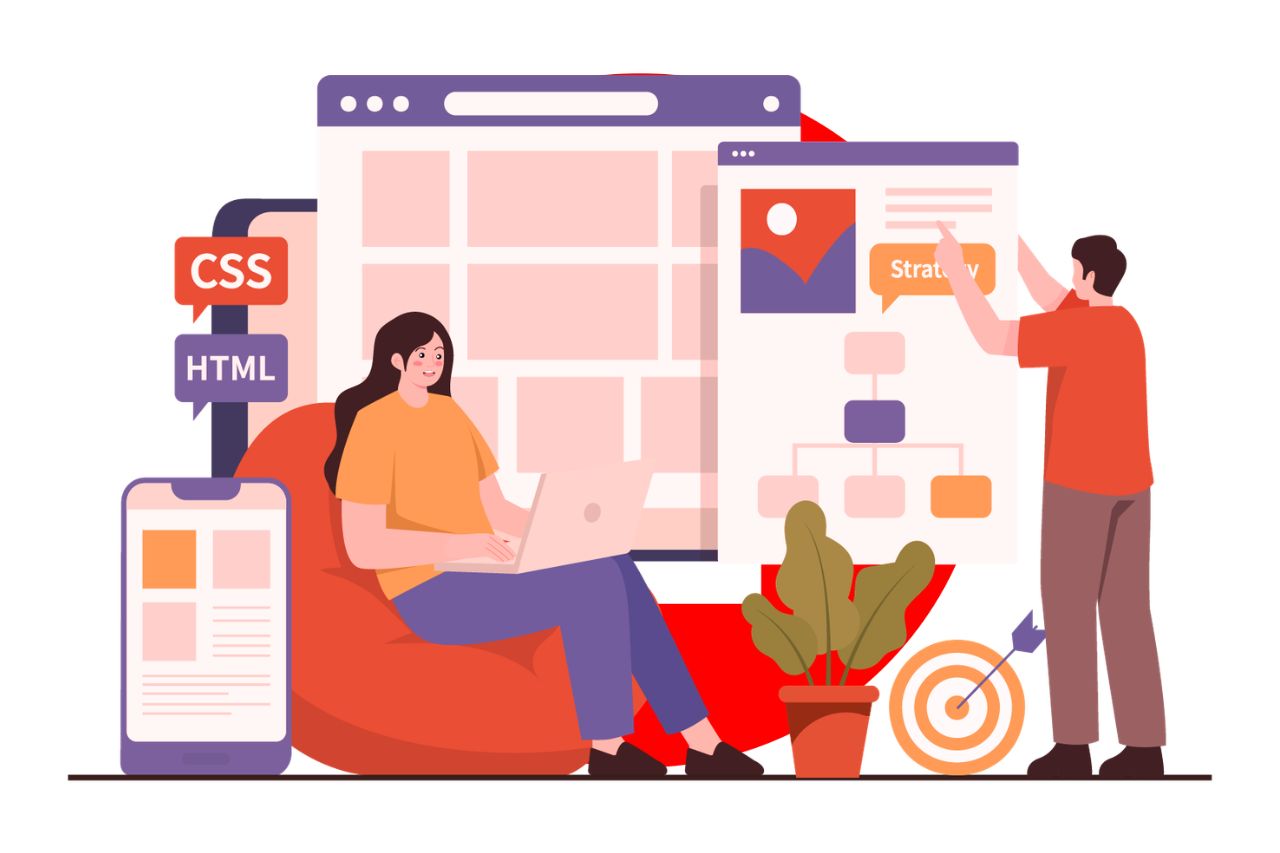
A design handoff is not a file transfer. It is a translation of product thinking into production code. When that translation fails, users feel it. They just cannot articulate why.
The Right Team Goes Beyond Specs to Understand the Intent
The best development partner is not the one with the longest technology list.
It is the one that understands why the interface was built the way it was. They respect the hierarchy. They ask questions before making assumptions. They preserve the design system. They know that a checkout flow or onboarding sequence, a security dashboard, or a loan application is not just a collection of screens. It is a sequence of decisions a real person has to make, often under pressure.
What a Disciplined Dev Team Does
- They do not cut corners on interaction states because covering every state takes more time.
- They do not rebuild components inconsistently because our carefully crafted source files or design system was not their idea.
- They flag conflicts when something technically possible would compromise what was designed.
- They ask questions and communicate before making changes, not after the sprint is closed.
That back-and-forth, that alignment between design intent and engineering execution, is what gets a product across the line the right way.
Design drift does not announce itself. It dismantles your product one screen at a time.
One screen is slightly off. Then another. Then a third. A button gets restyled. A table is rebuilt without the original spacing. A modal behaves differently than the prototype. A form validates differently than designed.
Any single one of those changes might seem insignificant. Collectively, they dismantle the user experience. The result is software that passes a quick look but does not hold up under real use. Less intuitive than it should be. Less polished than the design intended. Less effective at the workflows it was built to support.
This is why implementation review matters.
A Partner Studio That Has Earned the Trust
Many of our clients come in with their own development teams already in place, and that is completely fine. We collaborate with in-house and external engineers regularly, providing developer-ready specs, annotated files, and component documentation. But the best outcomes, consistently, happen when there is real symmetry and communication between design and development from the beginning.
When a client does not have a dev team, or needs one they can trust, I connect them with a South Florida-based development partner - headquartered here in Florida with a second office in Atlanta, GA - that I have been working alongside for going on two years now. Two of my clients are still actively working with them, including a cybersecurity company we introduced to them. In this industry, two years of sustained work across multiple client relationships means something real. It means the work gets done, deadlines get met, and the relationship holds up when things get complicated.
Their capabilities go well beyond what most people picture when they hear "dev shop":
And when the build is done, they do not just hand it over and walk away. Their dedicated quality assurance practice puts the code through its paces before anything ships, catching bugs and breaking points before real users do.
Design-First Model. Right Engineering Partner Second. Alignment Throughout.
Here is how this plays out in practice:
- The Skins Factory leads product strategy, UX design, UI design, prototyping, final artwork, and design systems when the scope calls for it. Every deliverable is annotated, spec'd, and handed off with enough context that a disciplined engineering team can execute it faithfully.
- Our partner studio builds the product. They know how to work from design-led specs. They understand component systems. They build for production, not just demos. And because they have been working with two of our clients for almost two years, they are familiar with how we do things.
- When clients engage us for implementation oversight, I stay involved throughout, a single point of contact who understands both the design intent and the engineering execution, keeping the product that ships aligned with the product that was designed.
The result is a cleaner, more accountable path from what gets designed to what gets shipped.
Read the full article at The Skins Factory Blog.