

A year ago, telling someone you spent a weekend building an entire SaaS product would have sounded like saying your pig grew wings on Friday and had you back from Paris by Sunday. Today, no one would blink an eye.
That’s because AI has flipped over the way software gets built.
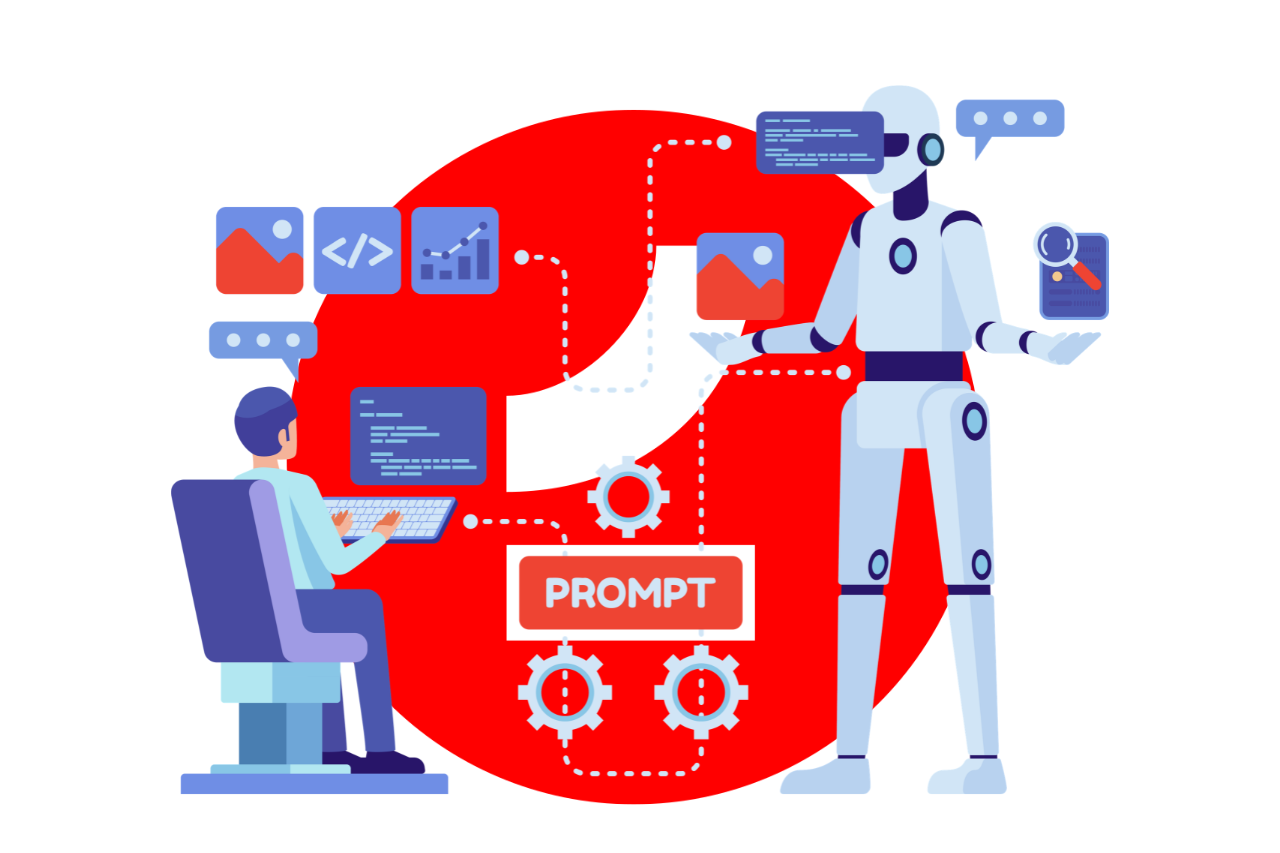
Founders used to need a tech co-founder, an agency, or a development team. Now, they can bring to life whole functioning apps through conversation. Describe a product, explain how it should work, refine the output a bit…and AI handles the implementation. The workflow we just described is known as vibe coding.
This term still generates equal amounts of excitement and skepticism. On one hand people think it’s the future of entrepreneurship, while others see it as a recipe for software nobody understands or can maintain.
As usual, the truth is somewhere in between.
The greatest opportunity for startups has nothing to do with replacing developers. The most attractive prospect of vibe coding is reduced time between having an idea and finding out if it’s worth the investment in the first place.
This vibe coding guide is here to show you how founders are using AI to build products, where this approach works great, where it falls apart, and how you too can use it without creating future problems.
What Is Vibe Coding?
The simplest definition would be something like this: “Vibe coding is building software by describing what you want, in natural language and letting AI generate most of the code, structure, and functionality for you.”
So basically, instead of opening an IDE and manually writing each component, API call, and database model, you let an AI system know what you want and then keep refining the result until you’re happy with it.
The term was coined by Andrej Karpathy, former Tesla AI director and OpenAI co-founder, in early 2025. He described a workflow where developers became more focused on outcomes while AI handled the implementation itself. The phrase quickly spread through the community as many builders were already doing it, just didn’t have the name for it.
To recap, the workflow is fairly simple:
1. Describe the software.
2. Let AI build it.
3. Test it.
4. Refine until satisfied.
5. Ship it.
But, in reality it gets a bit messier than this.
Founders using vibe coding AI workflows don’t just sit back and wait for the chatbot to magically create a successful business. The product decisions are still theirs to make, as well as prioritizing features, collecting customer feedback and figuring out what users really need.
Now they’re just spending less time wrestling with syntax, which lets them dedicate more time to validating ideas.
Why Vibe Coding Has Become So Popular Among Founders
The best thing about vibe coding for founders is that it takes risk out of the equation.
Historically, validating a software idea meant investing heavily in it. Even a basic MVP required hiring developers, finding tech partners, or outsourcing work before seeing any evidence that customers would care.
This was tough on early-stage startups.
You had to spend money, and a lot of it, before knowing whether the idea is worth pursuing.
Now, founders are able to build MVP without coding skills and test ideas before they commit further.
For example, as a founder once you had to spend three months and $30,000 building a prototype, and now you really can spend one weekend creating something functional enough to gather feedback.
Of course, this doesn’t guarantee success. What it does is make failure much cheaper.
The bottom line is that vibe coding for startups is now less about software development and more about learning as quickly as you can.
The Typical Vibe Coding Workflow
Every founder has their own process, but the basic process can be summarized like this:
1. Start With the Problem
First-time builders tend to make one beginner mistake: they describe features.
Experienced founders describe problems.
So instead of saying:
“Build me a project management app.”
They’ll say:
“Build a project management app for small marketing agencies that want to track client approvals across several campaigns.”
And, of course, the more context you provide, the better AI can interpret your intent.
2. Generate the First Version
This is where AI software development tools and AI agent coding tools enter the picture.
Platforms like Lovable, Bolt, Replit, Cursor, Claude Code, and v0 can generate interfaces, workflows, database structures, and backend functionality from prompts.
The first version is usually far from perfect, and that’s completely normal.
3. Test Ruthlessly
Recent researches on AI assisted software development show that experienced builders spend the majority of their time evaluating outputs.
Every workflow should include:
- User journey testing
- Finding broken functionality
- Identifying confusing interfaces
- Looking for security problems
- Validating business logic
4. Iterate Through Conversation
And this is where prompt based coding tools show their true power.
You can say things like:
- Add Stripe subscriptions
- Improve the dashboard layout
- Create an admin panel
- Reduce page load times
- Add user roles and permissions
The software evolves through conversations.
5. Launch Earlier Than Feels Comfortable
Many founders postpone launch since they want more features.
However the strongest vibe coding MVP projects tend to succeed because they launch before they’re complete.
This gives the chance to users to reveal which features are important to them, much more effectively than brainstorming sessions ever could.
The Greatest Benefits of Vibe Coding
It’s easy to understand the excitement around AI vibe coding. A few advantages stand out immediately.
Faster MVP Creation
When the goal is to build a SaaS product fast, AI can significantly slash down development timelines.
Things that once took weeks can now often be done in hours - and this is the main reason that MVP development for startups 2026 looks so different compared to just a few years ago.
Lower Development Costs
This one is a pretty obvious advantage.
Being able to build a startup without developers during the validation stage lets founders save capital and use it for marketing, sales, customer acquisition and general growth.
Most startups now see AI as one of the major factors of their startup MVP cost reduction AI strategy.
Better Idea Validation
Idea validation without developers is an incredible advantage for founders.
Instead of debating what the customer wants, they can now build a rough version and find out.
Greater Accessibility
AI tools for non technical founders now let entrepreneurs from marketing, operations, consulting, healthcare, finance, and countless other industries to directly partake in product creation. Recent user data from Lovable shows that many users come from non-engineering backgrounds.
Common Vibe Coding Mistakes Non-Technical Founders Make
You have probably stumbled upon a story or two about people who managed to launch SaaS without coding. It’s less likely you have come across a discussion where such projects run into trouble.
Trusting AI Too Much
“AI knows best.”
Well, not really. AI can generate code that works and still introduce security risks, problems with scalability, and hidden complexity.
Building Features Instead of Business
Because generating software is now so easy, founders sometimes build things no one ever asked for. If no customer wants it, there’s no demand and you just wasted your time.
Ignoring Technical Debt
All shortcuts have a cost.
When AI creates large amounts of functionality quickly it can accumulate technical debt without founders even realizing it.
Skipping Documentation
Most founders know what their software does, but far fewer can explain how it works. And that becomes a problem when developers eventually need to step in.
Due Diligence Areas Every Founder Should Review
Before you launch a product built with AI generated code tools, make it a habit to review these areas carefully:
Security
How are passwords stored?
How are API keys handled?
How is user data protected?
Authentication
Can users access information that belongs to other users?
Data Management
How is information stored, backed up, and can it be recovered?
Integrations
Do third-party services behave reliably?
Performance
Can the application handle growth?
Compliance
Depending on the industry you’re in, regulations may become important much sooner than expected. It’s important to make these checks before the product moves beyond experimentation.
When Developers Should Take Over
Ever since non-technical founders can build software without coding skills there’s this underlying impression that software engineers are becoming optional.
That’s just not what successful startups are doing.
In reality, many founders use AI to reach validation fast and then they bring experienced developers into the process.
There are a few indicators that it’s time:
- The number of users is growing
- Infrastructure costs rise
- Performance problems start showing up
- Multiple systems need integration
- Investors start asking technical questions
It’s best to think about product development with AI as an accelerator rather than replacement.
Best Vibe Coding Tools for Founders
There are dozens of options today, but a few platforms really dominate AI coding for startups.
Many founders combine tools, so a common flow might look like this:
- Lovable for rapid prototyping
- Claude Code for debugging
- Cursor for refinement
- Replit for deployment
This combo lets founders create an app without coding using AI - and also keeping it flexible as products grow.
Vibe Coding Statistics Every Founder Should Know
According to YC leadership, roughly 25% of startups in the Winter 2025 batch had codebases approximately 95% AI-generated. It’s important to note that these weren’t non-technical founders, but highly capable engineers that chose to work differently.
Lovable surpassed hundreds of millions in annual recurring revenue, attracting large numbers of non-tech builders.
Academic research has shown that AI assisted development tools have permanently changed how programmers do their job. The job isn’t disappearing, it’s changing.
What Success Stories Actually Teach Us
When founders think about how AI builds your startup MVP, the first thing that comes to their mind is speed. The more interesting lesson is judgment.
Companies like Lovable have built their entire business around becoming a technical co-founder for non-technical users.
The winners still need:
- Product thinking
- Understanding customers
- Clear positioning
- Business savvy
Best Practices for Founders
Here are some practices to keep in mind, if you’re planning to turn your idea into product without coding:
- Start small and start by solving one problem well
- Write detailed prompts
- Test every important workflow manually
- Treat AI outputs as drafts
- Document your decisions as you build
- When it becomes complex, bring in developers
Conclusion
The discussion around vibe coding often swings between two extremes.
Will AI replace developers entirely?
Is this technology just a passing hype?
The real story is that founders now have a new option. To build software using AI prompts, test ideas sooner, gather feedback ASAP and cut the cost of experimentation. All this makes early stage startup development strategy very different from what it looked like a few years ago.
But there’s one thing to remember. AI can help you create the product. But you, as the founder, still create the company.
At 2am.tech we have helped and continue to help many startups bridge the gap between rapid AI-generated prototypes and software that is production-ready. If you’ve used AI no code tools, AI software builders, or any other startup product development tool to get your first version off the ground - our team is there to help you transform it into a scalable, secure product ready for long-term growth. Let's talk.